Indonesian Music
Select a track
0:00
0:00
🔊
Ready to play
Loading...

Theory Name

Description of the theory and how it applies to this project.

Dancing Between Worlds

One More Search For Culture

Welcome to a place where Indonesian heritage is envisioned by a student who was once distant from it, where performing culture becomes pedagogy, and where the self is both storytelling and the story.

Traditional Tasks

Traditional Tasks

Language learning fundamentals

Maigo Sheep

Maigo Sheep

Cultural exploration game

Wayang Task

Wayang Task

Shadow puppet storytelling

Voicemail

Voicemail

Narrative audio messages

Bazaar

Bazaar

Marketplace encounters

LSP Task

LSP Task

Specific Purposes learning

Identity Auction

Identity Auction

Cost of transformation

Hey, I'm Mughni. Welcome to my...stage?

This website is designed as an experimental space where academic research meets a cultural performance-based learning environment. As someone who grew up distant from culture, I present an exploration of the challenges of expressing one's own culture in a foreign country and the tension between authenticity and creativity. To that end, I'm exploring how language learning transcends just vocabulary acquisition.

Being challenged let me to challenging it back, by educating myself about my own culture, getting into a seminar (研究会) about language sociocultural theory, and it then led me to founding and directing my own start-up, Eclectic.CO Laboratory, where we design and run all these (hopefully) cool research engineered education related projects as part of our contribution to this world. A byproduct of our activity is publishing this culture mediated online learning environment as a result!

Each task, game, and narrative element you'll encounter represents a theoretical framework in action. From games-based learning to sociocultural theory. This isn't just about teaching or learning; it's about understanding how we become ourselves through the languages we speak and the cultures we embody. Feel free to explore and have fun!

Manifesto 🎭

Culture should be living, creative, and ours.

However, culture has never been that simple. In fact, it never will be. It lives in the arts; it lives in everyday language; it lives in the unspoken rules that don't translate neatly. Culture is messy and evolving, but it is deeply tied to our own personal experiences.

Today, many of us grow distant from our own culture. Its authenticity feels like it's slowly fading. Not because it disappears, but because it shifts. Even people within the same culture can feel disconnected, unsure of their own traditions, unsure of what is inherited and what has already been diluted. Even those who carry it deeply question how to preserve or relearn something that is always changing.

But people should enjoy culture without worrying about its incompleteness.

This project challenges that incompleteness. It challenges the claim that culture cannot be taught. While the reasoning behind that belief is acknowledged, what would happen if people were foolish enough to challenge that claim by approaching culture through language education?

And for those who ask, "What's the point of culture?", imagine the possibilities. Culture isn't just heritage for the sake of nostalgia. It shapes how we think, interpret the world, and connect with others. If we take it seriously, the possibilities are enormous. It is creative power, economic power, and educational power. It fuels innovation, grounds learning in reality, and sharpens empathy, intuition, and adaptability.

Culture trains the brain to be more human. And that matters.

So when someone asks, "Why bother?", my answer is simple: We're here to make culture as bold, unique, and human as the people who carry it. For individuals, for communities, for how we live and learn. But can we actually do it?

Well, there's only one way to find out.

Culture. Is. Human.

Cast & Setting

The Researcher

The Researcher

Protagonist & Guide

A student caught between distance and return. Once detached from their own culture, they now navigate language, memory, and performance to understand what it means to learn and relearn where he comes from.

The Researcher

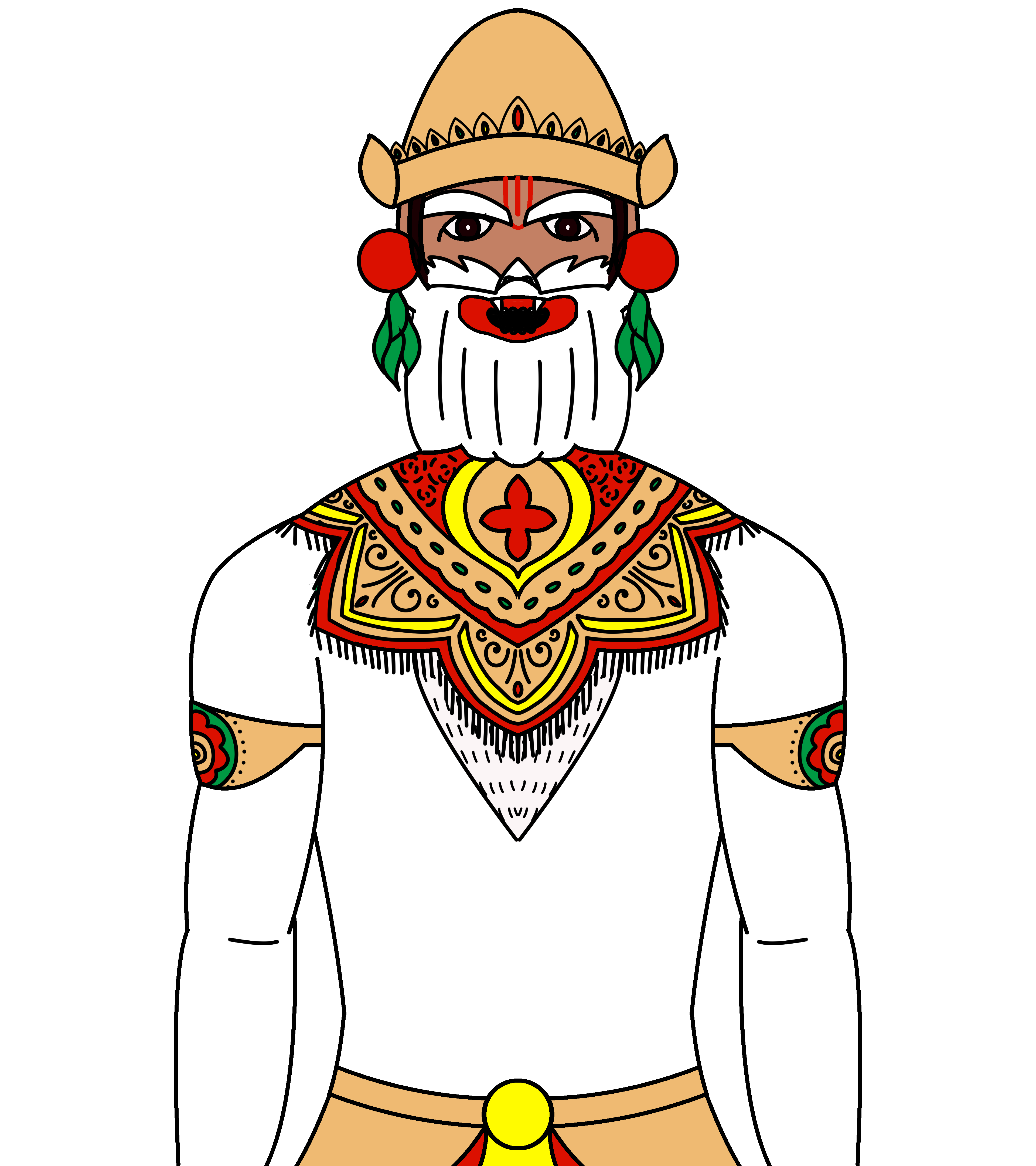
Professor Petak Wenara

The Professor

A playful mentor who refuses straight answers. Through games, riddles, and unexpected challenges, Professor Petak disrupts rigid ideas about language and tradition. He teaches not by explaining, but by provoking curiosity, revealing that language and culture is best understood when it is experienced, not memorized.

The Researcher

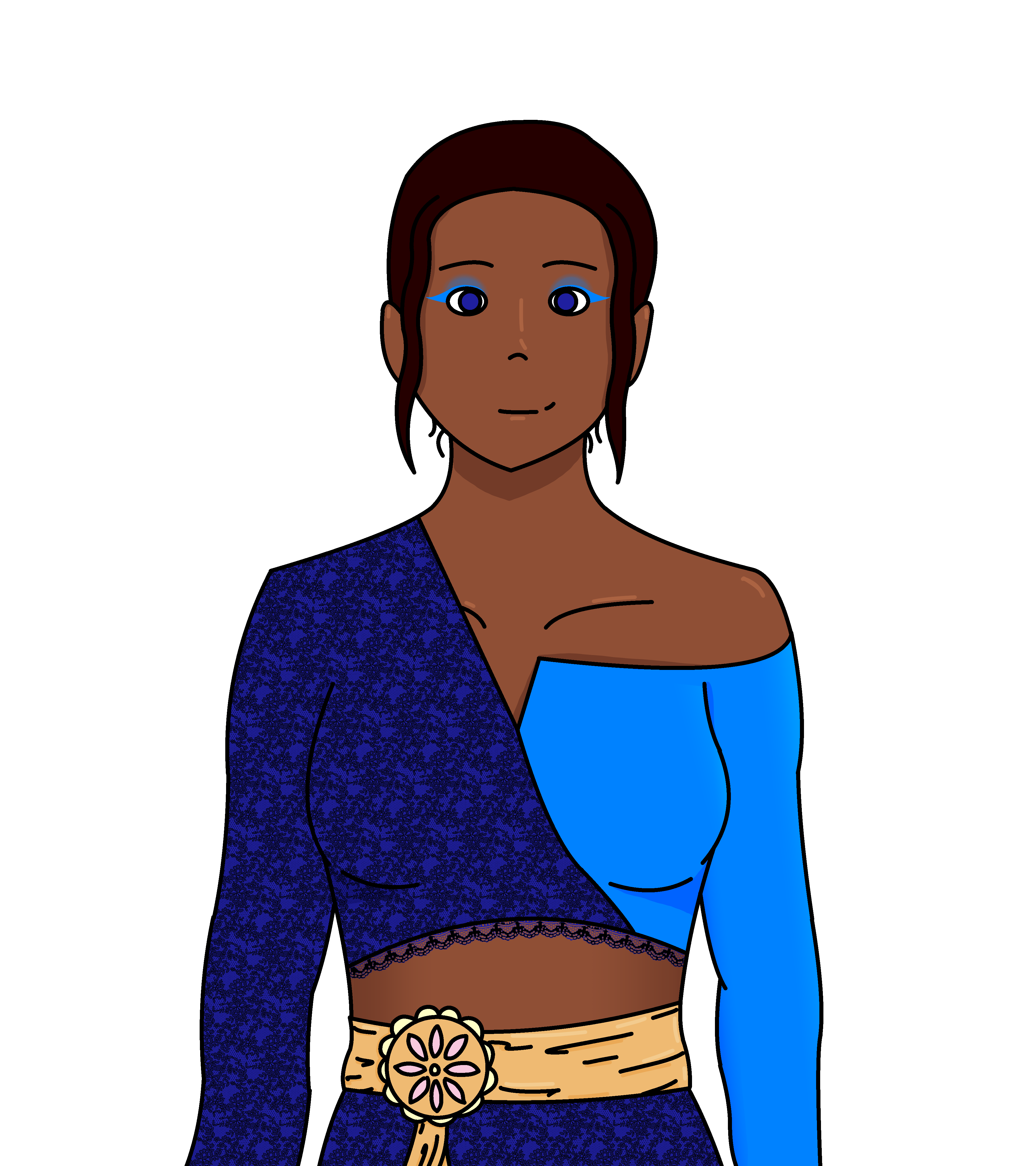
Gardenia Hilya Pangayoman

Indonesian Senior

A big sister who quietly looks out for those who follow. She loves art. Her presence and guidance helped the author navigate through university life with understanding and care. Truly, someone you can look up to and believe in.

The Researcher

Extras

The Others

Those who are part of the story along the way.

The Researcher

Setting

Place of Performance

The light novel takes place at Keio University, Japan.

Research Framework

The Research Questions

- How does an international student express their culture in a foreign academic environment?


- What tensions arise between authenticity (reproducing tradition) and creativity (reinterpreting it)?


- How can performance and playable storytelling reveal cultural understanding?


- How can an interactive platform (visual novel + website) facilitate collaborative meaning-making?

Why Connect It to Language Teaching & Learning?

A part of the Language Teaching & learning theory is that it is ecological, sociocultural approach that views language acquisition as inseparable from cultural arts, cultural identity and cultural performance. All of these can be explored when learning and teaching a language, and researching on the field. Here, I made a statement that explains my manifesto in a more declarative and organized format.

Theoretical Foundations

Click on any theory to view the related research paper.

Methodology

What is Autoethnography?

Autoethnography is a qualitative research method that combines elements of autobiography (writing about personal experience) and ethnography (studying cultural and social phenomena). The researcher uses their own lived experiences as the primary data to explore and interpret broader social, cultural, or political contexts.


In autoethnography, the researcher is not a detached observer — rather, they are the subject. Their personal voice, memories, emotions, relationships, and reflections become both data and analytical material.


I use autoethnography in this project because my own lived experience is directly connected to the themes I aim to explore. As an Indonesian student living in Japan, the cultural tensions, questions of authenticity, negotiations of identity, and shifting perspectives I encounter are not only personal events but reflections of broader social, historical, and political forces in Southeast Asia.

Digital Design Space: Choice of Website and Visual Novel

Using autoethnography and creative design-based research, I built a digital environment that combines a visual novel, an interactive website, and theatre-based design. Rather than simply reporting on my experiences, I chose to stage them—transforming my cultural journey into a form that others can step into, play with, and reflect upon.


I chose theatre because Indonesian cultural performance—such as traditional dance, wayang, and ritual gestures—already operates as a kind of living stage where values like sopan santun are enacted through movement, tone, and narrative conflict.


I chose the visual novel format because it mirrors the way cultural learning actually happens: through dialogue, interpretation, and participation. It is narrative-driven, interactive, and allows players to move between story, cultural tasks, and reflection.

Expected Results

What is this contributing to?

Through engaging with this digitally designed space, participants are expected to deepen their understanding of how cultural identity is performed, negotiated, and re-created in intercultural contexts. By following my autoethnographic narrative—as an Indonesian student learning to express culture in Japan—players encounter the tension between authenticity and creativity that emerges when presenting one's heritage abroad. The interactive tasks, including language-based activities rooted in concepts such as sopan santun, demonstrate how cultural values appear not only through artifacts but also through linguistic choices, gestures, and social interaction.

Eclectic.CO Impact Report

Eclectic.CO Laboratory

Official Cultural Impact Report

Dancing Between Worlds Project • 2025-2026
Cultures
2
Cultures being explored
Artifacts
24
Cultural Artifacts Used
Participants
1,666
Participants Reached
Tasks
30
Culture-Mediated Tasks
Games
3
Culture-Mediated Games
Chapters
12
Story Chapters

Cultures Being Explored

Indonesia
Indonesian
Primary focus • Java, Bali, Sumatra regions
👨‍🎓 248 learners 📋 34 tasks
Japan
Japanese
Student background culture • Comparative studies
👨‍🎓 248 learners 📋 8 tasks

Most Used Cultural Artifacts

Recent Cultural Activities

December 2024
Wayang Performance Workshop
Interactive storytelling session • 32 participants
November 2024
Indonesian Market Role-Play Day
Bazaar simulation • 28 participants
October 2024
Batik Pattern & Vocabulary Workshop
Art-language integration • 30 participants
September 2024
Visual Novel Launch Event
The Noesantara Story debut • 50+ attendees
August 2024
Sopan Santun Language Module
Politeness register training • Ongoing

Follow Our Journey

📋 Experience Evaluation Rubric

# Evaluation Criteria 5 4 3 2 1

Cultural Task Designer

Designer

Indonesian Cultural Artifacts as Tasks

Explore how each artifact can become a learning experience

12 ARTIFACTS

Each cultural artifact carries deep meaning and pedagogical potential. Click on any artifact to discover two example tasks that transform cultural heritage into interactive learning experiences.

Reflection Mural

A collaborative space for thoughts and reflections. Share your insights, questions, and experiences as we journey together through the intersections of language, culture, and identity.

Voicemail

*Beep* You've reached the cultural intersection hotline. Listen to dispatches from the journey between worlds...

Received Messages

Here are some cool past messages I have received! (if you'd like yours removed, leave me a voice message!)
If you want to send me a voice message, please do so here!

Date
Message
Sunday, December 29 3:23 AM
Sunday, December 29 3:56 AM
Thursday, January 2 9:34 AM

Credits

As an international student from Indonesia, I experienced both the challenge of recreating my culture and the joy of creative expression when performing traditional dance in Japan. This moment revealed for me a deeper dilemma: in a foreign country, how does one express a culture in a way that feels authentic, while still allowing room for creativity? This project is an attempt to explore that tension.


The result is a playable research story and learning environment. This online platform is a hybrid of narrative visual novel, task-based language teaching and learning mediated through culture, and an attempt to express my own culture.


All of this wouldn't have happened if I didn't step out of many comfort zones and had a will to learn more. Thank you, me. Cheers to The Noesantara Story and Eclectic.CO Laboratory, both projects and the start-up I founded, directing, and managing.

Resources

From mid-July 2025 until early January 2026, this project was directed and coded all by Mughni, with occasional code-fixing using Claude.AI. It is published as an accessible website on Neocities. The visual novel game is directed and coded by Mughni, and embedded in the Neocities' website. The design of the background and characters in the novel are drawn by Mina Olsson, in collaboration with Eclectic.CO Laboratory. All icons are downloaded from Flaticon.com and Melon's website.

Acknowledgements

This project was created as part of the ISAN 2026 Symposium and the final project "A design space learning environment" of the Trace Seminar at Keio SFC. This project is planned to be used in the Bahasa Indonesia Faculty of Keio SFC, as well as being of use through the Embassy of Indonesia in Japan for its language programs between the two countries.


I would like to express my deepest gratitude to everyone who supported its development. Starting from myself, who have and will never give up on what he has set his eyes on doing. To my beautiful parents, who to be honest don't understand my creations (sometimes) but are always in the full (financial, emotional, ,and intellectual) support of every decision I make and process I'm going through. To Professor Trace, who is always up for my ideas (looking forward to the other projects Professor :D) and provides the knowledge and guidance I need to push through. To my best friend and brother, Minh, who always pushes me to be aura farm anytime I can (he farms aura better than me). And finally, to you, reading this. Thank you for everything.


Serta mulia,
Mughni
Founder, Director, and Principal Investigator of Eclectic.CO Laboratory™